Table of Contents
ToggleZinc Oxide Desulfurization Catalysts: Characteristics and Applications
Introduction
In many industrial fields such as ammonia synthesis, methanol production, hydrogen generation, natural gas processing, and petrochemicals, raw feed gases inevitably contain sulfur compounds. Hydrogen sulfide (H₂S) makes up the majority of these impurities, but organic sulfur species like carbonyl sulfide (COS), carbon disulfide (CS₂), mercaptans, and thioethers also appear. Although these sulfides exist at low concentrations, they cause severe damage to downstream processes. For this reason, we must deeply purify the feed gas before it enters the main reactor, reducing total sulfur to below 0.1 ppm or even lower. Zinc oxide desulfurization catalysts serve as the most widely used and most reliable core material for this fine desulfurization step.
What Is a Zinc Oxide Desulfurization Catalyst?
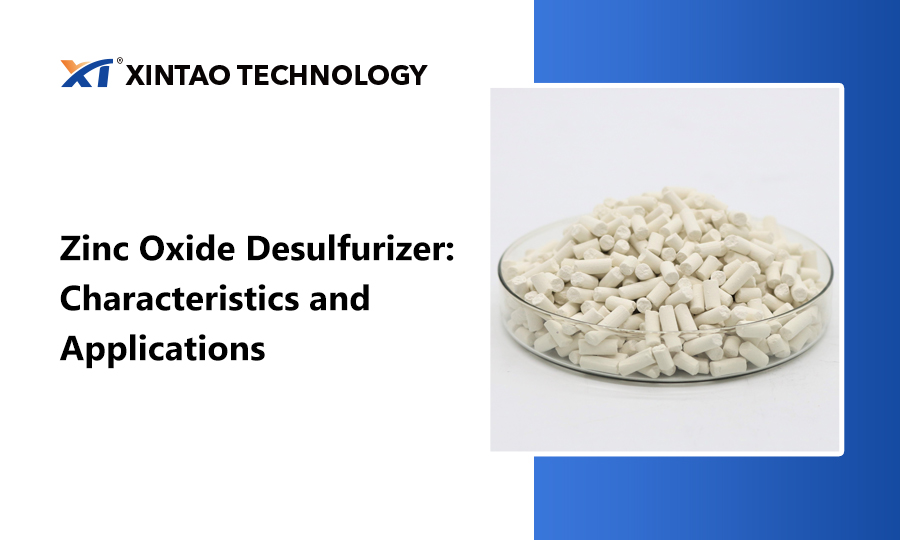
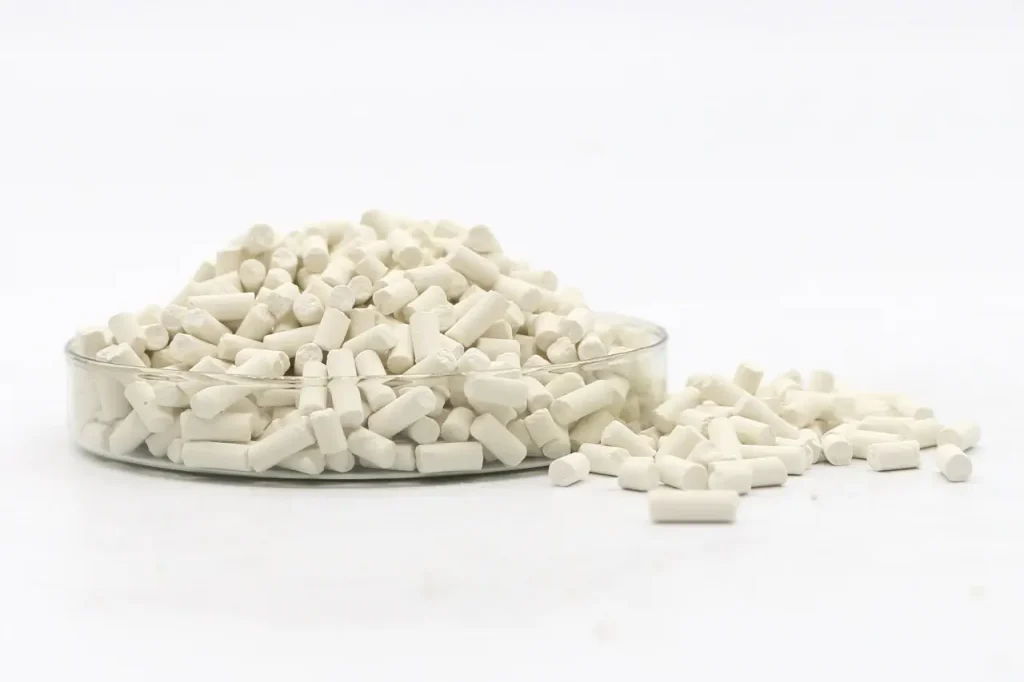
A zinc oxide catalyst for desulfurization is a solid granular desulfurizer that uses zinc oxide (ZnO) as its main active component, with promoters and binders added through mixing, forming, drying, and calcination. It acts as a conversion-absorption type solid desulfurizer – it not only absorbs hydrogen sulfide chemically but also converts and absorbs some simple organic sulfur compounds like COS and CS₂.
Core Reaction Principles
The catalyst undergoes typical gas-solid non-catalytic reactions with sulfur compounds. The main chemical reactions include:
Removing hydrogen sulfide: ZnO + H₂S → ZnS + H₂O
Removing carbonyl sulfide: ZnO + COS → ZnS + CO₂
The resulting zinc sulfide (ZnS) is extremely stable and remains fixed inside the desulfurizer, making the process irreversible. This ensures that the purified gas does not release sulfur again, guaranteeing reliable cleaning performance.
Key Features of Zinc Oxide Desulfurization Catalysts
Zinc oxide desulfurization catalystser stands out for their extremely high desulfurization accuracy. Under optimized operating conditions, they can reduce hydrogen sulfide concentrations to below 0.1 ppm – a level that fully meets the strict sulfur requirements of ammonia, methanol, and hydrogen processes.
They also offer a very high specific surface area, which provides plenty of active reaction sites. Their high compressive strength keeps the bed from powdering easily. Another major advantage is their exceptionally wide operating temperature range. This allows zinc oxide catalysts to adapt flexibly to different process temperatures, from ambient-temperature fine desulfurization to high-temperature coal gas purification.
Applications of Zinc Oxide Desulfurization Catalysts
Natural Gas Purification
Natural gas often contains small amounts of hydrogen sulfide, mercaptans, and other sulfides. For gas with low sulfur content, we can use zinc oxide alone for fine desulfurization. For gas with higher sulfur levels, we can apply an activated carbon-zinc oxide series process – first using activated carbon to remove most sulfides, then using zinc oxide as a final guard bed.
Ammonia and Methanol Production
In ammonia and methanol plants, after we hydrotreat feedstocks such as natural gas, refinery gas, or light oil to convert organic sulfur, we usually connect a zinc oxide desulfurizer in series. This protects the downstream nickel-based catalysts used in steam reforming, shift conversion, and methanation from sulfur poisoning.
Petrochemicals and Polyethylene Production
In olefin polymerization processes like polypropylene production, trace sulfur in the propylene feed poisons the polymerization catalyst and seriously harms product quality. Zinc oxide fine desulfurizers effectively protect the propylene polymerization catalyst. Furthermore, zinc oxide desulfurization also plays a vital role in fine chemical areas such as oxo synthesis.
Hydrogen Production
Zinc oxide desulfurizers find wide use in fine desulfurization of hydrogen production feed gases. Whether we produce hydrogen from natural gas, coal, or refinery dry gas, the feed gas must pass through zinc oxide desulfurization before entering the reformer to ensure long-term stable operation of the conversion catalyst.
Other Industrial Gases
These desulfurizers also work well for many other industrial gases – including coking gas, coke oven gas, water gas, and shifted gas – as well as liquid feeds like liquid hydrocarbons and naphtha. They also show broad potential in electronics, metallurgy, and other sectors.
Conclusion
Zinc oxide desulfurization catalysts provide an irreplaceable guard function in fine desulfurization across ammonia, methanol, hydrogen, natural gas, and petrochemical industries. Their comprehensive advantages include high desulfurization accuracy, large sulfur capacity, wide operating temperature window, simple operation, and stable reaction products.
Frequently Asked Questions
Q1: What is the difference between zinc oxide desulfurization catalysts and ordinary desulfurizers?
The core strength of zinc oxide catalysts lies in their extremely high desulfurization precision – they can reduce hydrogen sulfide to below 0.1 ppm, even to ppb levels. They also offer an irreversible reaction, producing very stable zinc sulfide that does not release sulfur again. Ordinary desulfurizers like activated carbon cost less, but their accuracy and stability often fall short of zinc oxide. That is why we usually use zinc oxide as the final guard bed for fine desulfurization.
Q2: Which sulfur compounds can zinc oxide desulfurization catalysts remove?
Zinc oxide catalysts mainly remove inorganic sulfur (H₂S). They also have some conversion absorption ability for simple organic sulfur compounds such as COS, CS₂, mercaptans, and thioethers. For complex organic sulfur like thiophene, the direct removal effect is limited. In such cases, we must first convert organic sulfur to H₂S through hydrogenation or hydrolysis, and then use zinc oxide for absorption.
Q3: Why does zinc oxide desulfurizer fear water?
Under certain conditions, zinc oxide desulfurizer can react with water: ZnO + H₂O → Zn(OH)₂. This product blocks the micropores, reduces surface area and pore volume, and weakens or even breaks the desulfurizer particles. Therefore, we must strictly control the feed gas temperature to prevent water vapor from condensing and entering the desulfurizer bed.
Q4: How can we tell when a zinc oxide desulfurizer needs replacement?
The main criteria for replacement include: (1) The outlet sulfur content consistently exceeds the limit – this indicates the desulfurizer is nearly saturated and has exhausted its breakthrough sulfur capacity; (2) The bed pressure drop rises significantly – possibly due to powdering, carbon deposition, or impurity blockage; (3) The operation time reaches the designed service life – calculated based on feed sulfur content and cumulative gas throughput. We recommend regularly monitoring outlet sulfur and bed pressure drop, keeping operating records, and planning preventive replacements rather than reacting to unplanned shutdowns.
Contact Us
Company Name: Jiangxi Xintao Technology Co., Ltd.
Email: export@xt988.com
Whatsapp: 13576431259
Address: Xintao Technology Industrial Park, New Third Board Industrial Park, Pingxiang City, Jiangxi Province