Table of Contents
ToggleXintao Inert Alumina Ceramic Balls in Petrochemical Industry
Ⅰ. Introduction
In petrochemical processing, the difference between smooth, profitable operations and frequent, costly shutdowns often comes down to the small details. One such detail—often overlooked but absolutely critical—is the bed support material inside fixed-bed reactors.
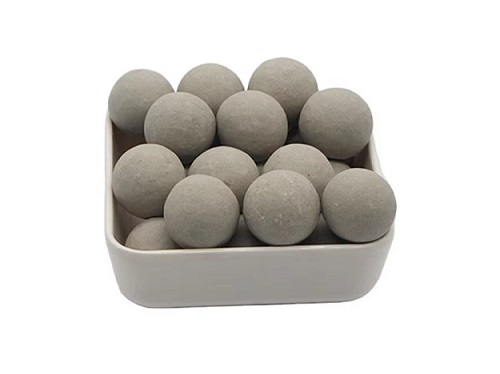
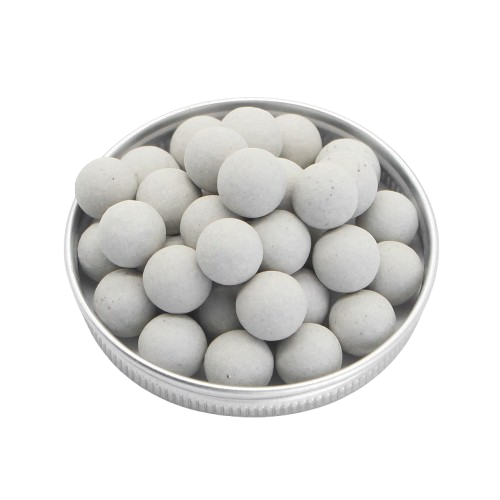
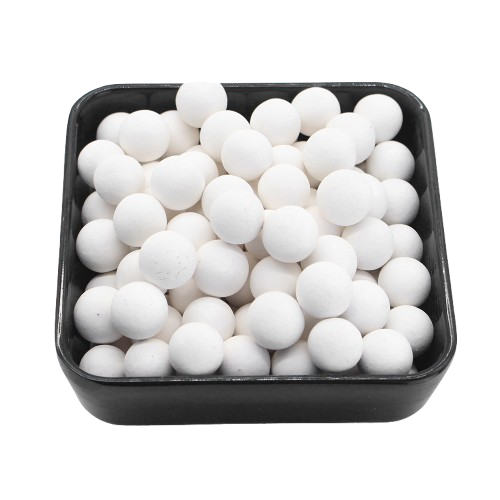
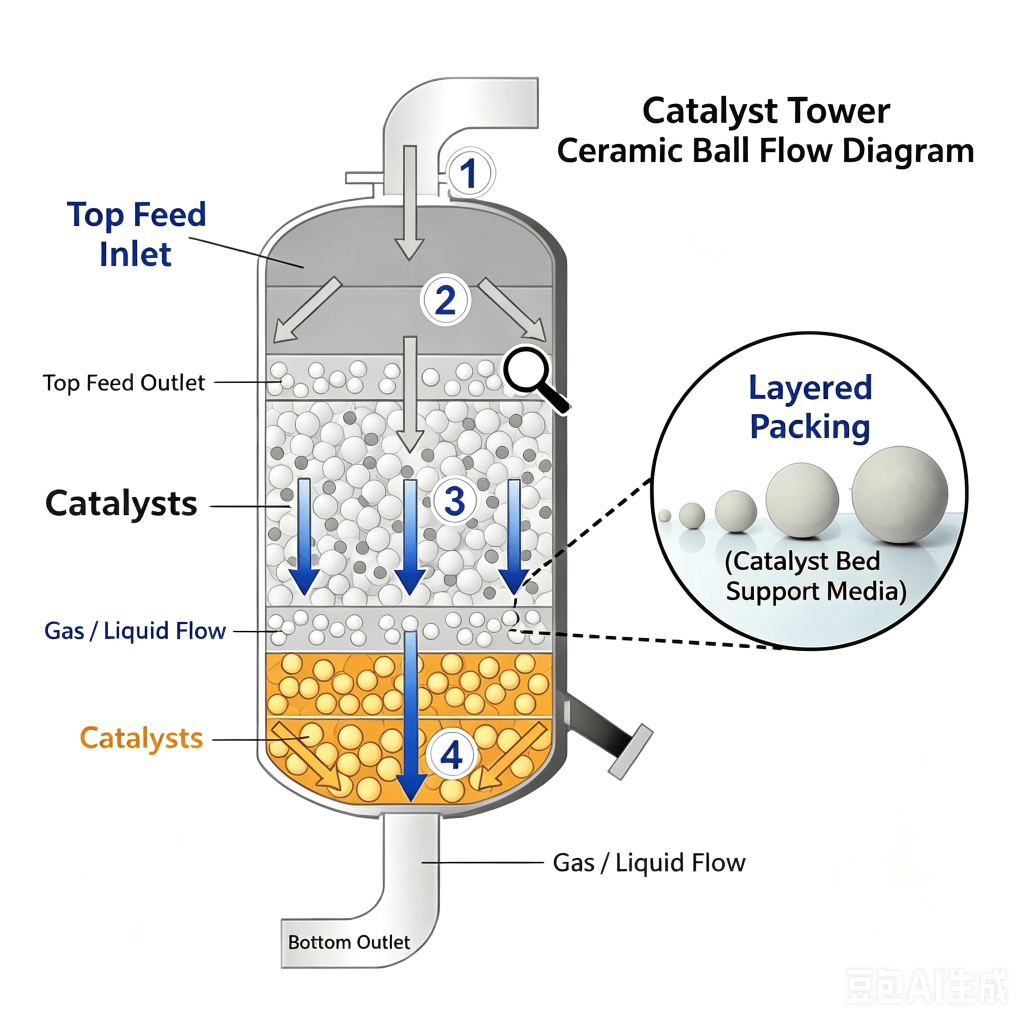
Inert alumina ceramic balls may not participate directly in chemical reactions, but their role in protecting catalysts, balancing fluid flow, and extending run lengths makes them indispensable across hydrocracking, catalytic reforming, isomerization, and demethylation systems. They are installed at both the bottom and top of catalyst beds in fixed-bed reactors to prevent catalyst particle migration, support active catalyst layers, and enhance flow distribution.
Ⅱ.Three Core Functions That Drive Performance Gains
1. Catalyst Support and Physical Protection:
The primary job of these ceramic ball involves shielding the active catalyst from physical damage. As liquid or gas feeds enter the reactor from the top, they carry significant kinetic energy. Without an inert top layer, this forceful stream would directly strike the catalyst bed, eroding particle surfaces and breaking fragile extrudates. The ceramic top bed disperses this energy across a wide area, gradually slowing the fluid before it contacts the catalyst. Similarly, the bottom layer prevents catalyst fines from migrating downstream, where they could foul heat exchangers or compressors. This dual protection strategy extends catalyst life by 20% to 40% in many reported cases.
2. Fluid Distribution Enhancement:
Poor flow distribution ranks among the leading causes of underperforming reactors. When feed streams channel through preferential paths, large portions of the catalyst remain underutilized, while overworked zones suffer from rapid deactivation. Inert ceramic balls solve this problem by creating thousands of additional distribution points. As gas and liquid pass through the interstitial spaces between alumina balls, they repeatedly split and recombine, ensuring every cross-section of the catalyst bed receives a balanced flow. This uniform wetting and vapor-liquid contact maximize the effective use of every active site, directly boosting conversion rates and selectivity toward desired products.
3. Contaminant Filtration and Fouling Prevention:
Feedstocks derived from crude oil invariably carry impurities—gums, coke fines, heavy metal compounds, and particulate matter. If these contaminants reach the catalyst, they deposit on active surfaces, block pore entrances, and accelerate deactivation through poisoning or coking. The porous microstructure of high-quality alumina ceramic balls traps these solids effectively. The balls act as a depth filter, capturing particles within their surface pores and interstitial voids. By removing these troublemakers before they reach the catalyst, the ceramic layer keeps the main bed cleaner for longer periods.
Ⅲ. Case Study
1.Real-World Performance Under Demanding Conditions
A petrochemical complex operating a continuous catalytic reforming unit faced persistent issues with catalyst displacement and uneven temperature profiles. They replaced their existing support media with 99% high alumina balls, graded in 6mm and 13mm sizes. The unit operated under severe thermal cycling—daily temperature variations exceeding 150°C—and in the presence of chlorinated compounds that would attack lower-grade materials. The alumina balls remained intact, with no measurable weight loss or cracking after 18 months of service.
Because the support layer did not react with hydrocarbons or the precious-metal catalyst, the active sites remained fully accessible. The uniform reactant distribution eliminated cold-band formation, raising the average reactor inlet temperature by 3°C without exceeding metallurgical limits. This adjustment improved naphthene dehydrogenation rates, boosting hydrogen production and increasing reformate octane number by 1.2 points. The plant documented a 22% extension in catalyst cycle length and reduced maintenance downtime by nearly 40 hours per year, delivering significant operational cost savings.
2. Global Adoption and Supply Reliability
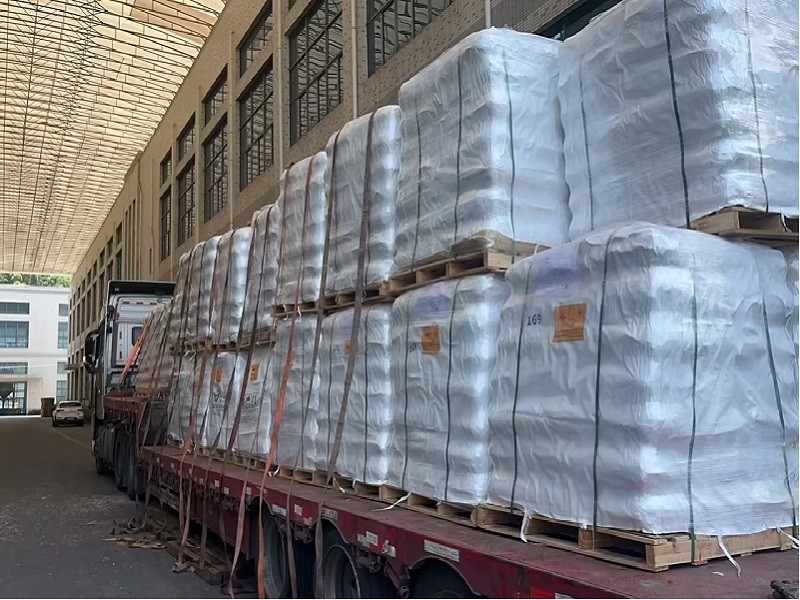
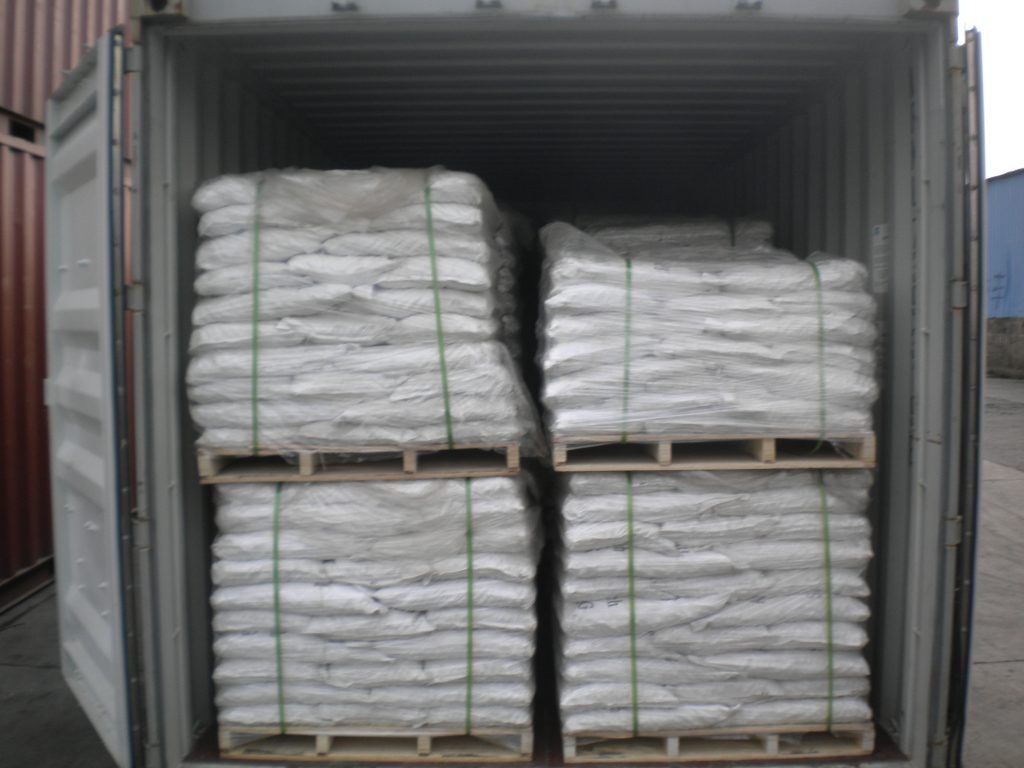
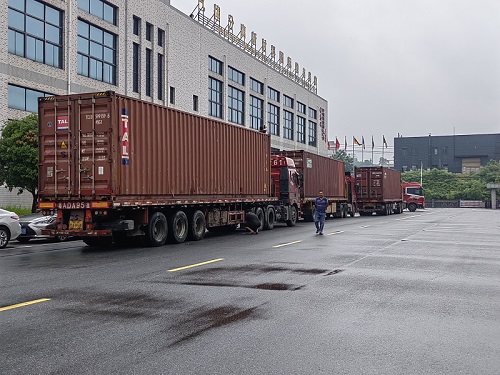
Leading manufacturers like Xintao have responded to this growing demand with consistent quality and large-scale production. In a recent shipment, Xintao delivered 100 tons of 6mm and 13mm inert alumina ceramic balls to a long-term Indonesian client for their catalyst bed support systems. The client reported seamless installation and immediate improvements in bed stability. Shortly after, Xintao supplied 108 tons to a South Korean refinery, where the balls performed flawlessly in a high-severity naphtha processing tower. Both customers confirmed stable, reliable operation with no support-layer failures after multiple turnaround cycles.
These successful deliveries highlight a broader trend: as refineries push for longer run lengths, higher feed rates, and tighter product specifications, the choice of inert support media becomes a strategic decision. High-purity alumina balls offer the thermal resilience, chemical inertness, and mechanical strength that modern petrochemical processes demand. Their ability to protect catalysts, equalize flow, and trap contaminants directly translates to better margins, fewer unplanned outages, and safer operations.
Ⅴ. Conclusion
Selecting the Right Ceramic Ball for Your Application:Choosing the appropriate size, alumina purity, and mechanical grade depends on your specific reactor design and process conditions. Smaller balls (3–6mm) offer higher surface area for filtration and finer flow distribution, but they also create higher pressure drop. Larger balls (13–50mm) reduce pressure drop but provide less filtration capacity. Most engineers perform hydraulic calculations to balance these factors. Purity is also crucial, as different aluminum content levels are suited to different operating conditions; aluminum content can be categorized into low-aluminum (16%–26%), medium-aluminum (50%–80%), and high-aluminum (90%, 92%, 99%) grades.
Frequently Asked Questions
Q1: What is the difference between inert ceramic balls and catalyst pellets?
Inert ceramic balls do not participate in chemical reactions; they only provide physical support, fluid distribution, and filtration. Catalyst pellets contain active metals like platinum, nickel, or cobalt that drive the desired chemical transformations. You must never substitute one for the other.
Q2: How often should I replace inert alumina ceramic balls in my reactor?
Typically, these balls last through multiple catalyst cycles—often 3 to 5 years or more—provided they do not suffer mechanical damage or excessive fouling. Inspect them during each catalyst changeout; replace them if you observe significant erosion, cracking, or heavy contamination that cannot be cleaned.
Q3: Can I reuse ceramic balls after removing them from a reactor?
Reuse is possible only after thorough cleaning and careful inspection for cracks, spalling, or dimensional changes. Many plants choose to replace them to avoid any risk of contamination or unexpected failure, given their relatively low cost compared to reactor downtime.
Q4: What happens if I install the wrong size ceramic balls?
Incorrect sizing can cause excessive pressure drop (too small), poor flow distribution (too large), or catalyst migration through gaps. Always follow the reactor manufacturer’s recommended size range and perform a bed-loading calculation to ensure optimal performance.
Q5: Do ceramic balls help reduce catalyst poisoning from heavy metals?
Yes, to a certain extent. The porous structure traps particulate heavy metal compounds and coke fines before they reach the catalyst. However, they do not remove dissolved metals or chemically active poisons like arsenic or lead—those require dedicated guard beds or feed pretreatment.
Contact Us
Company Name: Jiangxi Xintao Technology Co., Ltd.
Email: export@xt988.com
Whatsapp: 13576431259
Address: Xintao Technology Industrial Park, New Third Board Industrial Park, Pingxiang City, Jiangxi Province