Table of Contents
ToggleCan molecular sieves be regenerated after prolonged use?
Molecular sieves are widely used as highly efficient adsorbents in industrial drying, air separation, and gas purification. With prolonged use, molecular sieves will experience performance degradation due to adsorption saturation. So, can molecular sieves be regenerated and reused after prolonged use? The answer is yes. However, the regeneration methods differ significantly depending on the application and type of molecular sieve, and the lifespan after regeneration also varies.
Why can molecular sieves be regenerated?
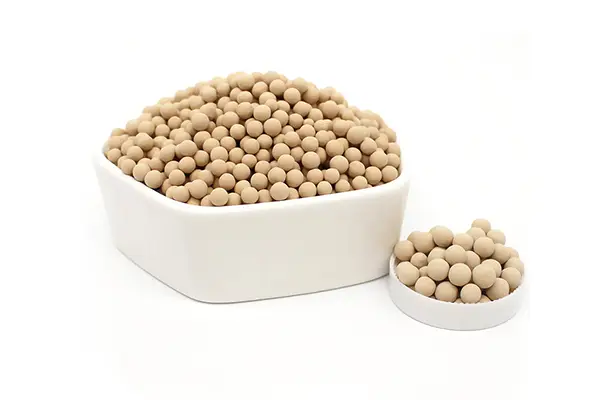
The adsorption effect of molecular sieves mainly relies on their regular microporous structure and strong surface polarity. The adsorption process is physical adsorption; when external conditions (temperature, pressure) change, adsorbed water molecules, carbon dioxide, organic matter, etc., can desorb, thereby restoring the molecular sieve’s adsorption capacity. This characteristic makes molecular sieves a regenerable adsorbent material and a significant advantage over disposable desiccants.
Conventional Drying Molecular Sieves: High-Temperature Purge Regeneration
For conventional drying molecular sieves (such as 3A, 4A, 13X, etc.) used in adsorption dryers and compressed air purification devices, the most common regeneration method is high-temperature thermal regeneration. The specific process is as follows:
The molecular sieve bed is purged with heated dry gas (such as air or nitrogen), causing the adsorbed moisture and carbon dioxide to desorb due to the increased temperature. The regeneration temperature of the adsorption dryer is typically controlled between 120 and 180°C; for molecular sieves in air separation oxygen production systems, the regeneration temperature needs to be even higher, generally 200 to 250°C. This high-temperature purging method is more thorough, but energy consumption is relatively high, and it places certain requirements on the thermal shock resistance of the molecular sieve.
Oxygen and Nitrogen Production Molecular Sieves: Pressure Swing Adsorption Regeneration
In PSA (Pressure Swing Adsorption) oxygen and nitrogen production units, the working method of molecular sieves (such as lithium X, 5A, etc.) differs from conventional drying. They employ the pressure swing regeneration principle, eliminating the need for high-temperature heating:
Pressure adsorption: Under higher pressure, the molecular sieve selectively adsorbs nitrogen (for oxygen production) or oxygen (for nitrogen production);
Pressure reduction desorption: The pressure is reduced to atmospheric or negative pressure, and the adsorbed gas is naturally released, restoring the activity of the molecular sieve.
This process can be completed at room temperature, is highly efficient and energy-saving, significantly reducing operating costs and avoiding potential damage to the molecular sieve structure from high temperatures.
Although molecular sieves can theoretically be repeatedly regenerated, practical applications have shown that ordinary quality molecular sieves are prone to serious problems after several high-temperature or pressure-switching regeneration processes, such as breakage and pulverization, decreased adsorption capacity, or impact on production stability. To address these issues, Xintao high-quality molecular sieves have undergone targeted optimization in materials and processes. Through a special process, parameters such as compressive strength, abrasion rate, and adsorption performance of its molecular sieves have reached high standards.
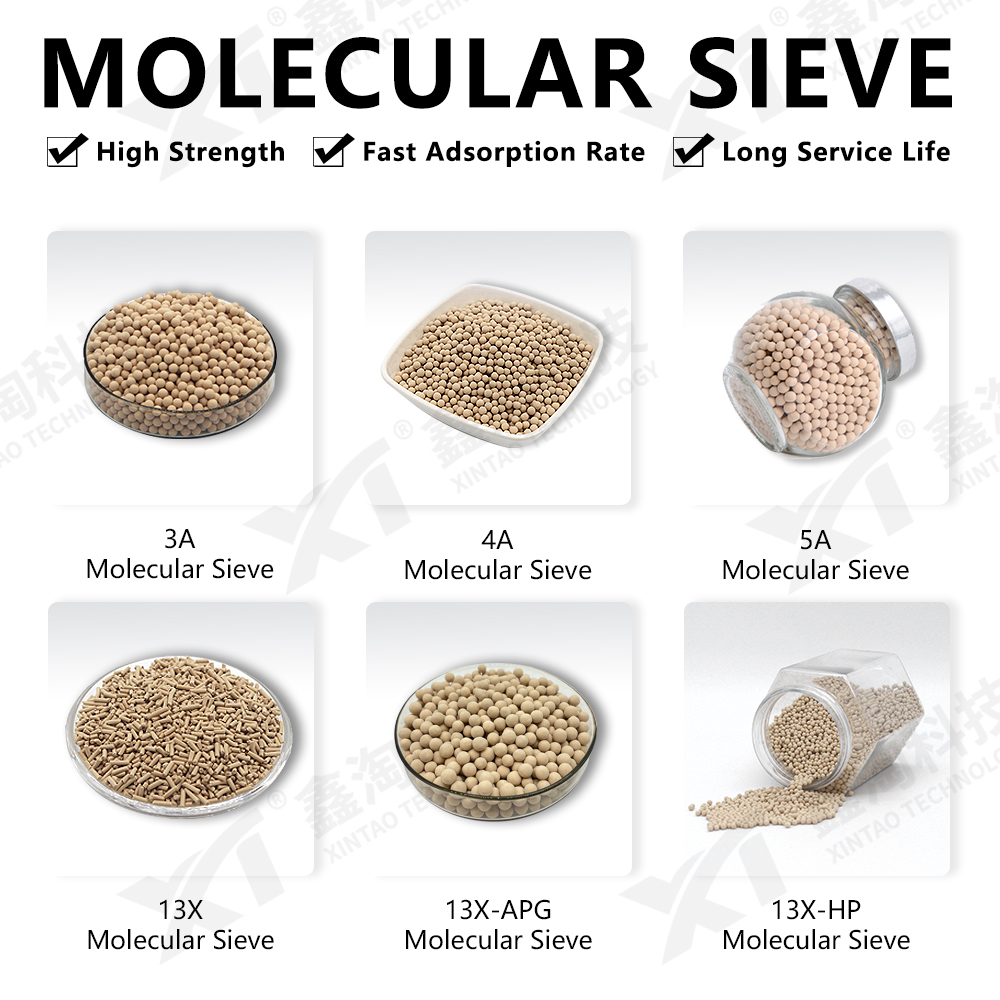
In summary, molecular sieves can be fully regenerated after long-term use, but the regeneration effect and service life strongly depend on the matching degree between the quality of the molecular sieve itself and the regeneration process.

Contact Xintao
If you have any question, please contact us!