Table of Contents
ToggleCauses and Prevention of Molecular Sieve Particle Breakage
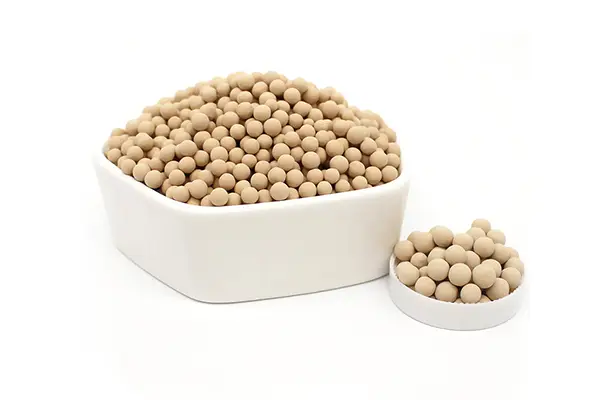
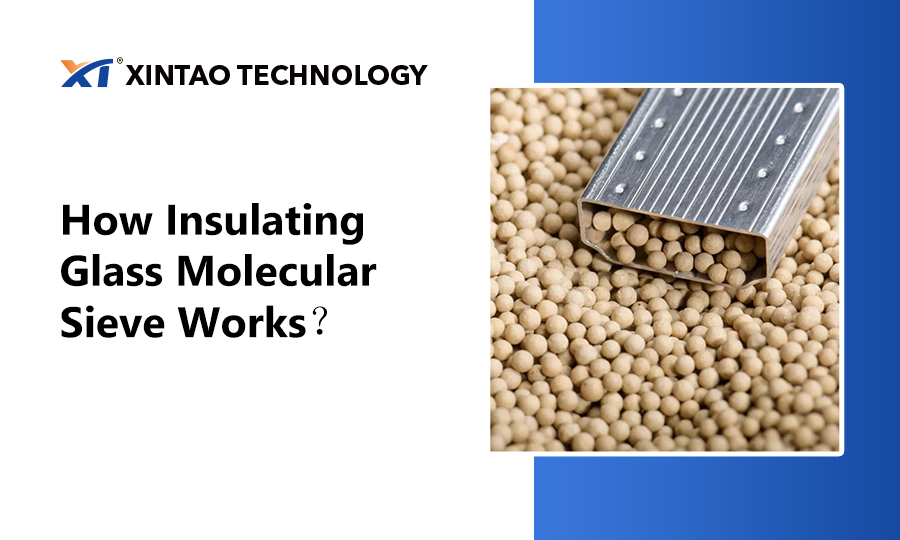
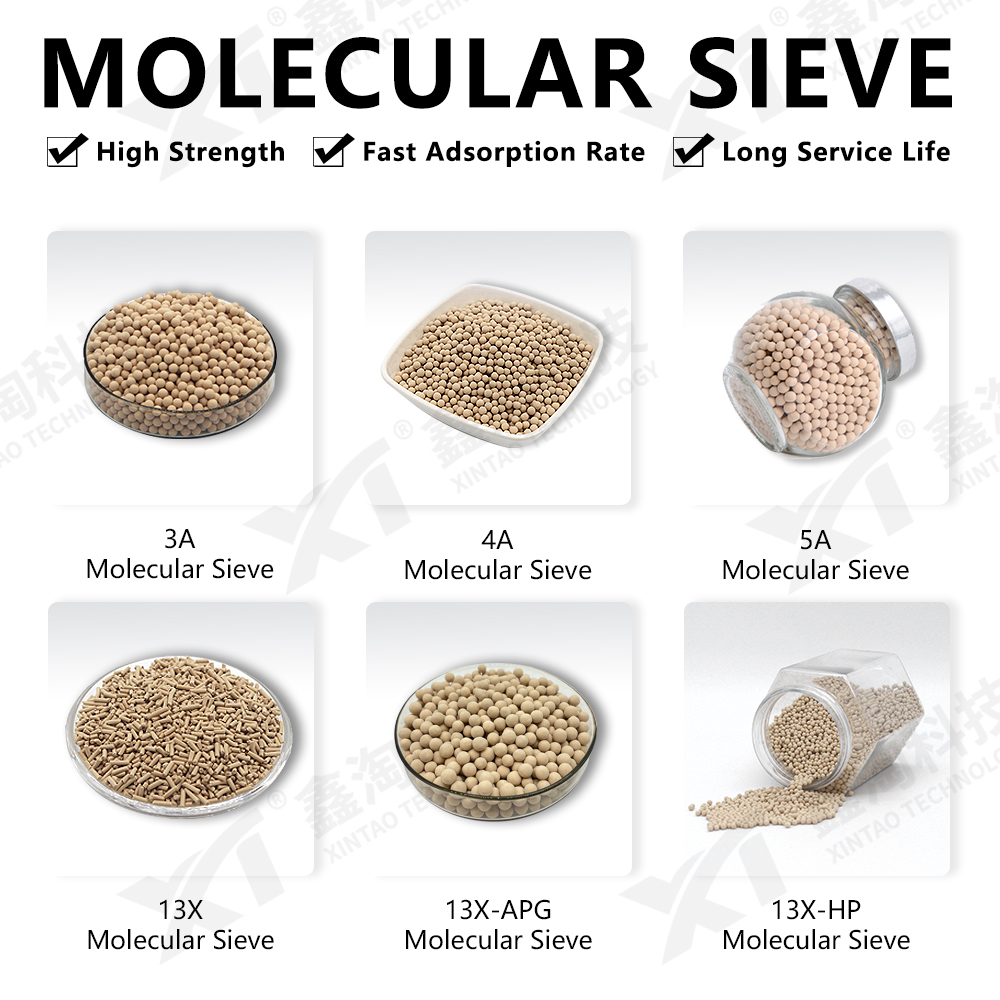
Molecular sieves, also known as “synthetic zeolites,” are alkaline aluminosilicates. They possess numerous uniform micropores, exhibiting selective adsorption capabilities. They selectively adsorb molecules smaller than their pore size, separating molecules in a mixture according to size. Based on different effective pore sizes, molecular sieves can be classified into various types, including 3A, 4A, 5A, 13X, and 13X APG molecular sieve, and are widely used in petrochemical, electronics, gas drying, air separation, and natural gas desulfurization and decarbonization industries.
Why do molecular sieve particles break or pulverize in industrial applications?
1. Insufficient strength, unable to withstand airflow impact and pressure fluctuations.
When operating in packed towers or reactors, molecular sieves must withstand various mechanical forces. The static pressure from the upper packing, the impact force from high-speed airflow, and the vibration from periodic operation all exert continuous or abrupt stress on the particles. In pressure swing adsorption (PSA) processes, adsorption and desorption cycles repeat repeatedly, with frequent changes in airflow velocity and pressure. This intensifies collisions and friction between particles, easily leading to edge damage or even overall fragmentation.
2. Loose packing, large voids in the molecular sieve bed, and frictional pulverization.
If the molecular sieve is not effectively vibrated and compacted during packing, large voids will remain between the particles. When airflow passes through, the molecular sieve desiccant particles shift, rotate, and rub against each other due to these large voids. Furthermore, the loose bed naturally settles under gravity and airflow, leading to repeated collisions between particles and exacerbating pulverization.
3. Oil and water entering the adsorption tank cause the molecular sieve to swell and break.
When the molecular sieve desiccant absorbs water, it releases a large amount of adsorption heat. Simultaneously, water molecules entering the pores cause the crystals to expand. The mismatch in the expansion coefficients of the binder inside the particles generates internal stress, leading to particle cracking and disintegration. Repeated water absorption can also cause the framework to hydrolyze, resulting in permanent loss of strength. In addition, oil entering the pores is difficult to desorb, and during high-temperature regeneration, it carbonizes and cokes, blocking the pores and generating thermal stress, cracking the particles. An oil film coating the surface can also block adsorption, rendering it ineffective.
How to avoid molecular sieve particle breakage?
1. Select high-quality molecular sieve products.
Controlling quality from the source is the first step in preventing breakage. High-quality molecular sieve should possess sufficient crushing resistance and a low abrasion rate. Xintao zeolite molecular sieves are a good option, with a strength exceeding 120N, making them resistant to high pressure and not easily broken.
2. Standardize the filling process to avoid mechanical damage.
High-altitude dumping is prohibited. Layered filling and segmented vibration compaction are required; each layer must be vibrated and compacted before adding the next. Support and buffer layers should be installed, and a layer of activated alumina should be laid on top of the bed with an elastic clamping device to prevent particles from jumping and rubbing against each other during airflow backflow.
3. Install a high-efficiency oil-removing water filter at the front end, and drain it periodically.
Install a high-efficiency oil-removing filter and a freeze dryer to ensure the inlet gas dew point is ≤-40℃. Install a water dew point meter and an online oil content monitor at the adsorption tank inlet; alarms will sound and automatic switching will occur if the levels exceed the limits.
Contact Xintao
If you have any question, please contact us!