Table of Contents
ToggleMolecular Sieves for Dehydration of Lithium-ion Battery Electrolyte Solvents
Electrolyte Composition
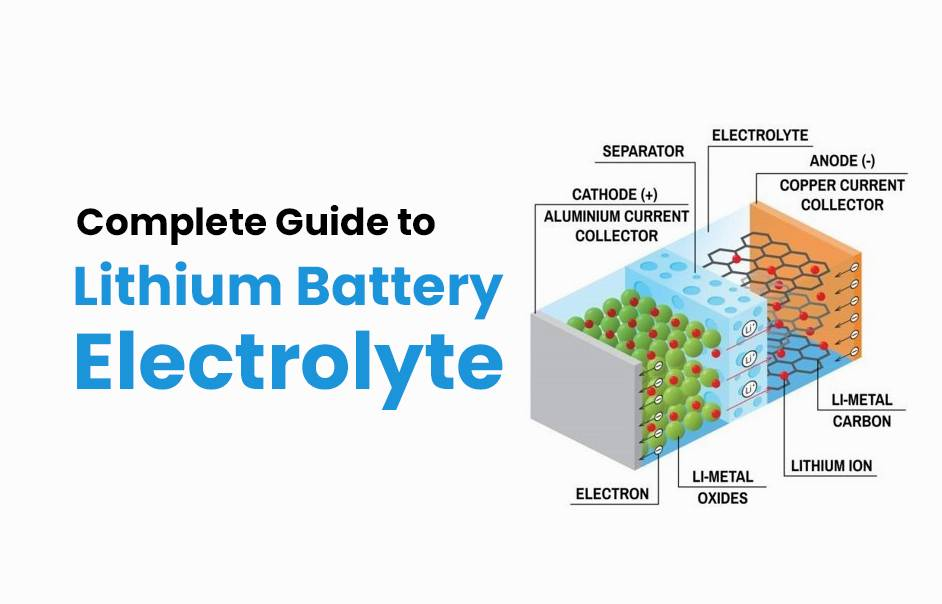
As one of the four major raw materials of lithium-ion batteries (positive electrode material, negative electrode material, separator, and electrolyte), the electrolyte is the ion conductor that conducts electricity between the positive and negative electrodes. It is formulated from high-purity organic solvents, lithium salt electrolyte, and necessary additives in a specific ratio. It plays a crucial role in the battery’s energy density, power density, cycle life, safety performance, and wide-temperature operation.
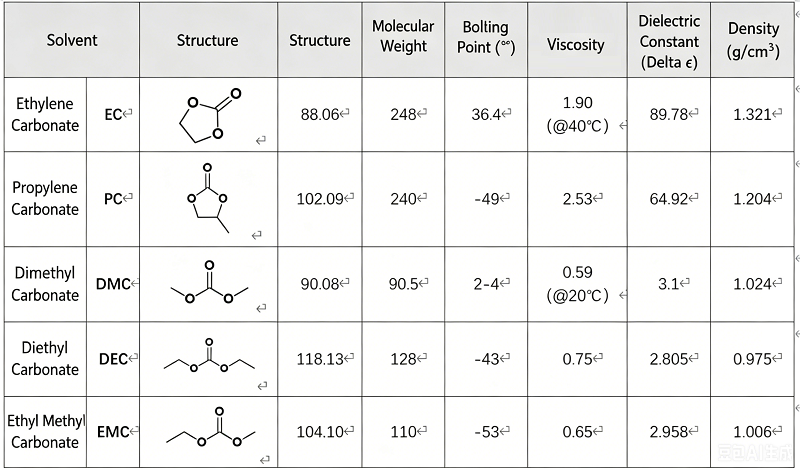
- Organic Solvents: The main function of the solvent in the electrolyte is to dissolve the lithium salt. Commonly used solvents in lithium-ion battery electrolytes include ethylene carbonate (EC), diethyl carbonate (DEC), dimethyl carbonate (DMC), ethyl methyl carbonate (EMC), propylene carbonate (PC), and dimethyl glycol ether (DME), which provide a stable chemical environment for lithium-ion migration. Typically, a moisture content of <20 ppm or even lower is required.
- Electrolyte lithium salts: such as lithium hexafluorophosphate (LiPF6), lithium bis(fluorosulfonyl)imide (LiFSI), or lithium tetrafluoroborate (LiBF4), provide mobile lithium ions and facilitate charge transport.
- Additives: Chemical compounds can improve electrolyte stability, enhance safety by suppressing side reactions, contribute to the formation of the solid electrolyte interphase (SEI), improve flame retardancy, and extend battery life. The synthesis and purification of film-forming additives such as vinylene carbonate (VC) and fluoroethylene carbonate (FEC) also require dehydration treatment.
Among the many dehydration technologies (such as distillation, membrane separation, and chemical drying agents), molecular sieve adsorption has become the core process for dehydrating lithium battery electrolyte solvents due to its advantages: high selectivity, simple operation, good reusability, and no introduction of new impurities.
Basic Principle of Molecular Sieve Dehydration
Molecular sieves zeolite are crystalline aluminosilicate materials with regular microporous structures. Their working principle is based on molecular sieving effect and polar adsorption: the uniform pore size allows only molecules smaller than the pore diameter to enter the pores and be adsorbed. Meanwhile, the electrostatic field of cations in the molecular sieve structure strongly attracts polar molecules such as water. The water molecule has a diameter of about 0.28 nm and is highly polar, making it one of the most easily adsorbed substances by molecular sieves.
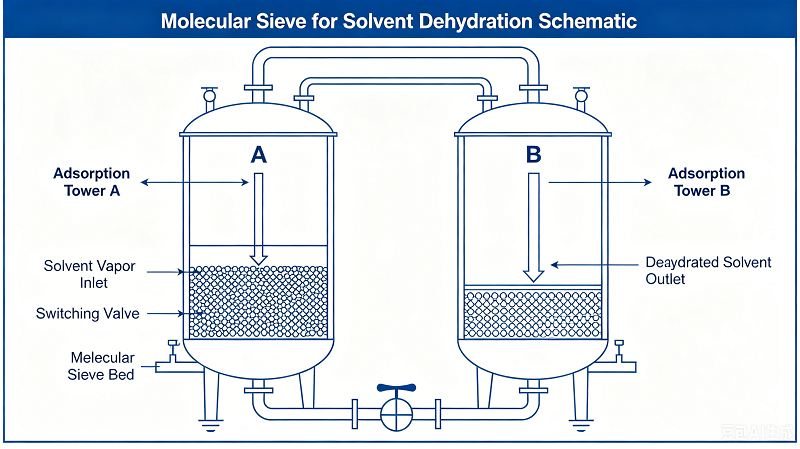
Before battery assembly, when a pure organic solvent (e.g., carbonates) containing water flows through a molecular sieve bed, water molecules enter the molecular sieve pores and are captured. The solvent molecules, because of their larger size or lack of strong polar affinity, pass through smoothly. Thus, selective dehydration is achieved. This effectively prevents trace water in the solvent from reacting with lithium salts to form harmful hydrofluoric acid (HF), thereby improving the safety performance and cycle life of lithium batteries.
Selection of Molecular Sieves
- Type selection: The main solvents for lithium battery electrolytes are carbonates. The molecular diameter of common solvents is above 0.45 nm (e.g., DMC molecular diameter ≈ 0.45 nm), which is much larger than the diameter of a water molecule. For dehydration of carbonate solvents, zeolite 4A molecular sieve is the first choice. Its pore size of 0.4 nm effectively allows water molecules to enter the pores while preventing DMC, EMC, EC, and other solvent molecules from being adsorbed, thus avoiding solvent loss.
- Specification selection: Spherical molecular sieve beads are preferred. Recommended particle sizes are 1.6–2.5 mm or 3–5 mm to ensure good hydrodynamic performance. Particles that are too large reduce specific surface area and adsorption efficiency. Particles that are too small increase bed pressure drop and generate more dust.
Example Product: Xintao 4A Molecular Sieve
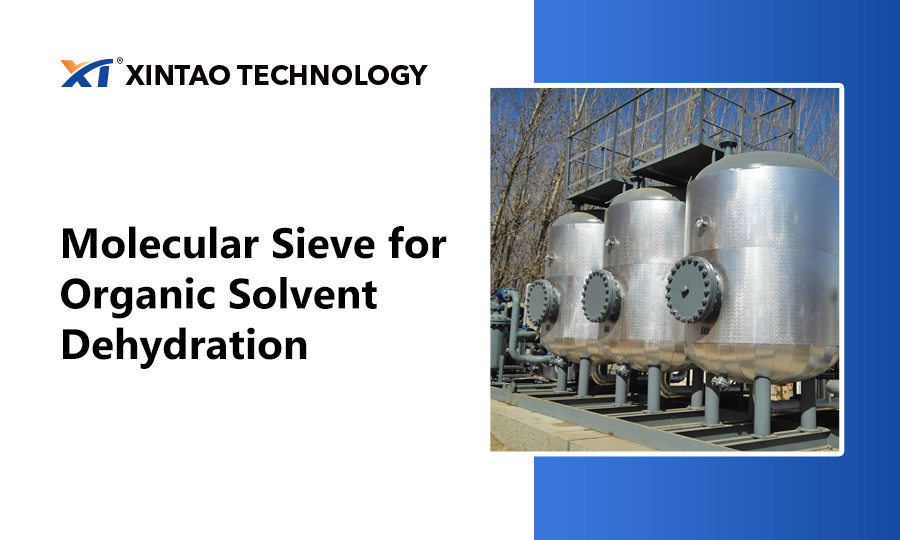
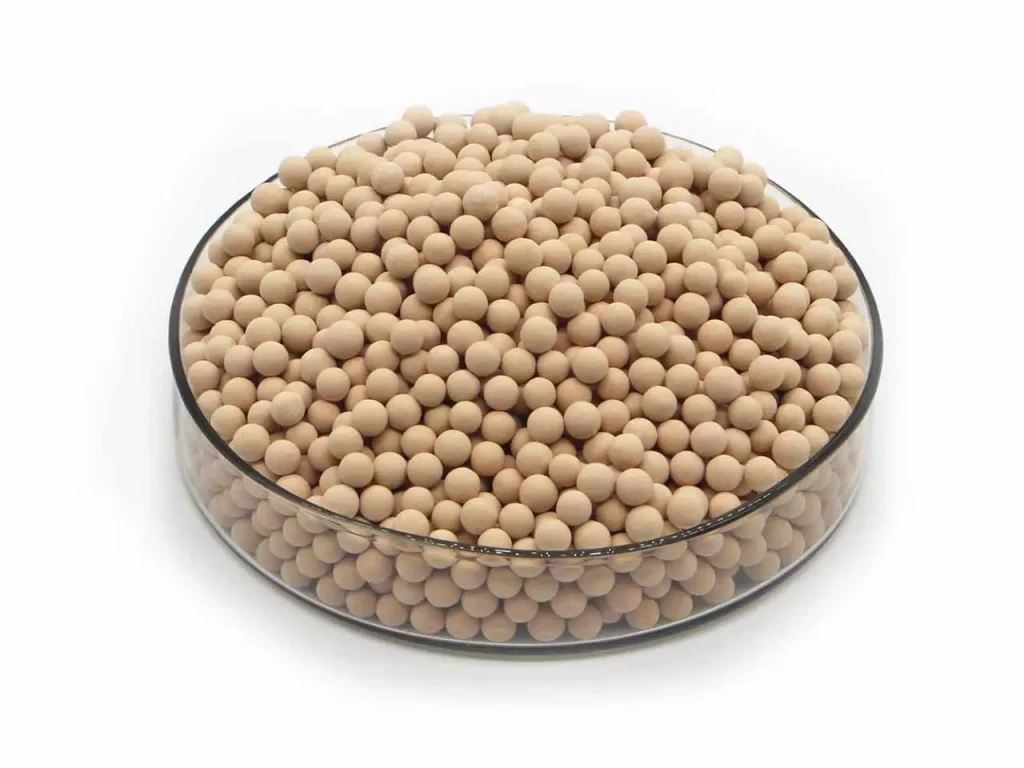
The Xintao 4A molecular sieve adsorbent has a uniform specific surface area and high adsorption capacity. Its static water adsorption value exceeds 22%. It can reduce the water content of solvents from 500 ppm to 20 ppm. At the same time, it does not crack when soaked in water (crush strength > 80 N), resists acid and alkali corrosion, and has a long service life. It also prevents caking in the lithium battery electrolyte solvent.
The quality of organic solvents for lithium battery electrolytes must be strictly controlled before use. The purity of the solvent is closely related to the stable voltage. The oxidation potential of a qualified high-purity organic solvent is about 5 V. The oxidation potential of organic solvents is important for studying overcharge prevention and safety of batteries. Strictly controlling the water content in organic solvents has a decisive impact on preparing qualified lithium battery electrolytes.
Key Precautions
- Solvent dehydration: Molecular sieve dehydration must be completed before mixing with lithium salts. Once lithium salts such as LiPF₆ are dissolved, using molecular sieves will cause ion exchange (introducing metal ions like sodium into the electrolyte), disrupt the electrolyte composition ratio, and cause solvent deterioration.
- Dehydration equipment: Currently, the industry mostly uses large-diameter molecular sieve adsorption columns or dedicated dehydration tanks for batch or continuous treatment. However, care must be taken to avoid excessive downtime that would affect production efficiency.
- Equipment sealing: All solvent pipelines, valves, and storage tanks should be well sealed to prevent humid air from entering. Drying agents such as 4A molecular sieve desiccant can be placed at seals to continuously adsorb trace moisture.
Contact Us
Company Name: Jiangxi Xintao Technology Co., Ltd.
Email: export@xt988.com
Whatsapp: 13576431259
Address: Xintao Technology Industrial Park, New Third Board Industrial Park, Pingxiang City, Jiangxi Province