Table of Contents
ToggleMicro-Tech Hidden in Polyurethane Adhesive? How Activated Molecular Sieve Powder Eliminates Bubbles
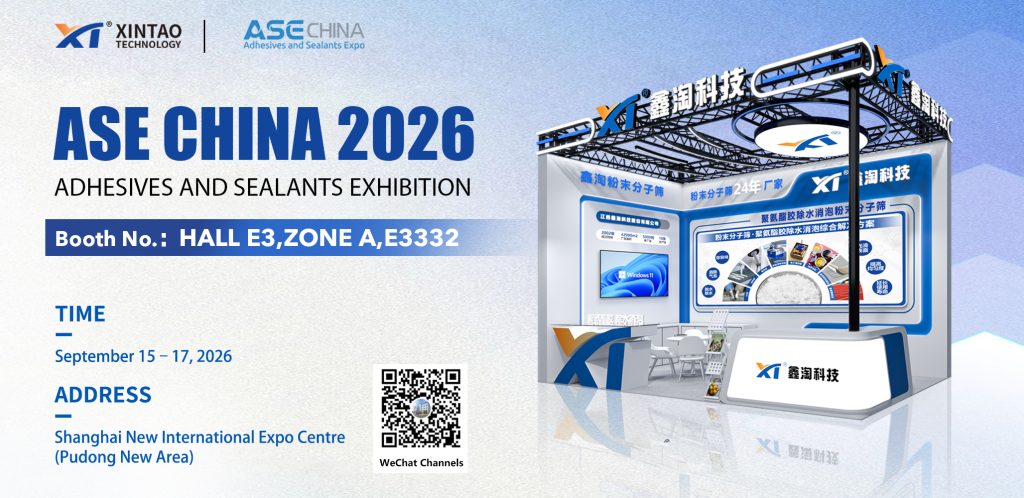
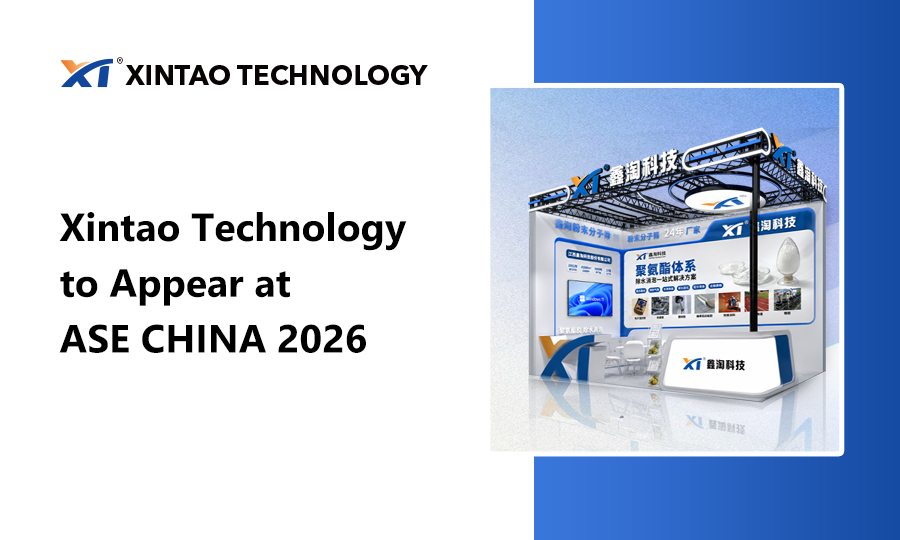
From September 15 to 17, 2026, the 29th China International Adhesives and Sealants Exhibition will take place at the Shanghai New International Expo Centre. Xintao Technology will present its powder molecular sieve dehydration solution at Booth E3332 in Hall E3.
Where Do Bubbles Come From: An Underestimated Variable
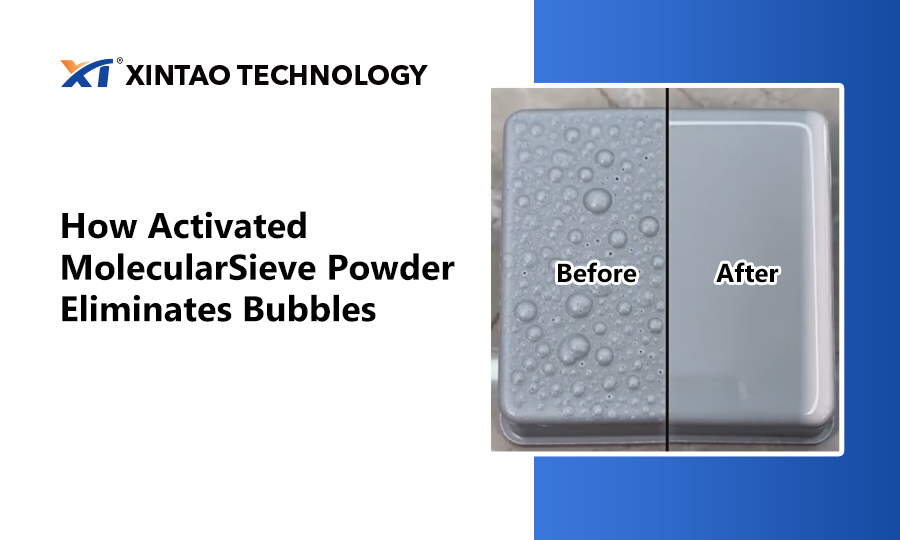
Pinpricks and bubbles in polyurethane adhesives often stem not from formula problems or poor process control, but from an easily overlooked variable—trace moisture. It hides in raw materials and in the air of the production environment, eventually triggering a chain of side reactions inside the adhesive. These side reactions not only damage appearance but also directly weaken bond strength and reduce insulation performance. In severe cases, they can ruin an entire production batch.
To solve this problem, you cannot rely on “surface defoaming” alone. You must cut off the contact path between water and isocyanate at the microscopic level. Activated molecular sieve powder is exactly this kind of microscopic technology hidden inside polyurethane adhesives.
How Do Molecular Sieve Powder "Recognize" Water Molecules?
For polyurethane systems, the real threat to product quality is sometimes not visible impurities, but trace moisture hidden in raw materials. Once water enters the system, it reacts preferentially with isocyanate and releases CO₂ gas:
R-NCO + H₂O → R-NH₂ + CO₂↑
If these continuously generated gases cannot escape in time, they form bubbles inside the adhesive, which eventually appear as surface pinpricks, blistering, honeycomb cavities, and other defects. At the same time, moisture consumes part of the NCO groups that would otherwise participate in crosslinking, affecting normal curing.
The result is:
Moisture enters ➡ reacts with NCO ➡ produces CO₂ ➡ bubbles increase ➡ surface defects appear ➡ crosslinked structure suffers ➡ adhesion performance and product stability decline
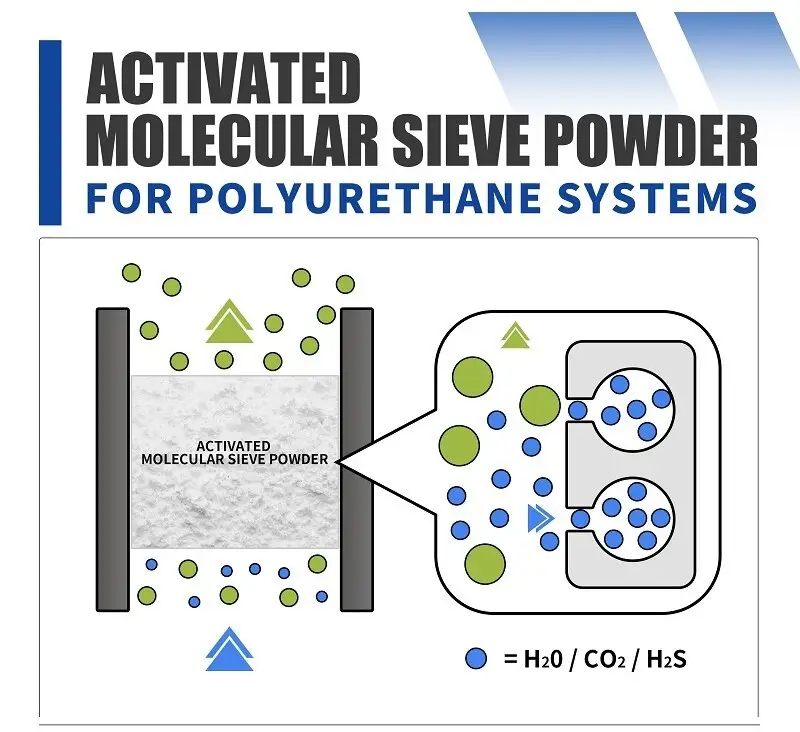
What makes this worse is that traditional countermeasures often treat symptoms, not root causes: defoamers can only handle bubbles that have already formed and cannot block gas generation at the chemical source; high-temperature vacuum dehydration consumes large amounts of energy and only removes initial moisture from raw materials, making it hard to handle secondary moisture continuously introduced during production. The main problem is this: water reacts with isocyanate extremely quickly, so you must capture water molecules before the two come into contact. Unlike traditional dehydration methods, powder molecular sieve works as an additive that you can mix directly into polyurethane, polyurea, coatings, and other material systems. Their core dehydration principle comes from the regular micropore structure inside the molecular sieve. What this requires is not “remediation after the fact,” but “interception at the source.”
Why Choose Xintao Molecular Sieve Powder
Molecular sieve powder is white powder produced from synthetic molecular sieve raw powder through deep processing and activation. During high-temperature calcination, the raw powder loses water and gains a strong adsorption capacity. Zeolite molecular sieve powder has a high specific surface area and abundant micropore structure. Without changing the product’s own physical and chemical properties, they can quickly reduce the moisture content of polyether polyols. By removing water, they block the reaction between water and isocyanate that generates CO₂, thereby inhibiting bubble formation.
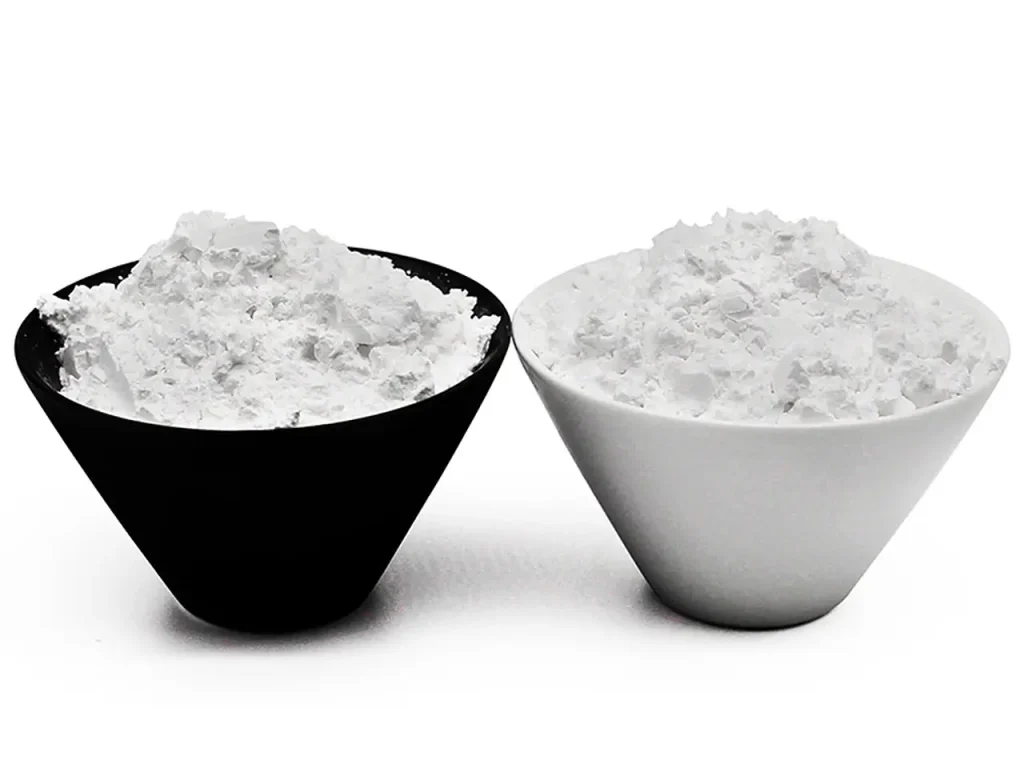
In polyurethane system production, adding just 3% Xintao zeolite powder molecular sieve can keep the system’s moisture content stably below 0.01%. As a desiccant, it offers the following advantages:
- Removes moisture
- Eliminates defoaming
- Smooths surfaces
- Extends curing time
- Eliminates odors
- Improves service life
Suitable Applications
Polyurethane adhesives, sealants, structural adhesives, two‑part epoxy adhesives, construction adhesives, new‑energy vehicle body adhesives, automotive interior adhesives, honeycomb aluminum panel adhesives, paints and coatings, plastic tracks, rubber composites, insulating glass strips, and more.
Correct Selection of Activated Molecular Sieve Powder
Molecular sieve powder adsorbents are not “one model fits all scenarios.” Different particle sizes offer different adsorption selectivity and suit different systems. Choosing the wrong model may lead to poor dehydration results or even affect adhesive performance. Xintao powdered molecular sieve has a size of 2–4 microns and come in multiple models, mainly including potassium-based molecular sieve powder, sodium-based molecular sieve powder, calcium-based molecular sieve powder, sodium X molecular sieve powder, and modified molecular sieve powder. They deliver excellent water absorption, with static water adsorption values reaching 23%–27%.
Choose Models According to System Requirements
- Potassium-based molecular sieve powder (3A molecular sieve powder): Its static water adsorption value exceeds 23%. It specializes in deep dehydration and suits polyurethane systems with high appearance requirements, such as sealants, automotive adhesives, two-component AB adhesives, glass adhesive strips, and floor coatings.
- Sodium-based molecular sieve powder (4A molecular sieve powder): Its static water adsorption value exceeds 24%. In addition to adsorbing water, it can capture some polar small-molecule impurities. It suits most general-purpose polyurethane adhesives, paints and coatings, and floor coatings. Adding 1%–3% can keep the system’s moisture content below 0.01%.
- Calcium-based molecular sieve powder (5A molecular sieve powder): Its static water adsorption value exceeds 25%. It offers high adsorption capacity and rapid dehydration, making it especially suitable for polyurethane bonding systems with higher raw material moisture. It ensures drying results with a smaller addition, such as in sealing potting adhesives and structural adhesives.
- Sodium X molecular sieve powder (13X molecular sieve powder): It has strong adsorption capacity, with a static water adsorption value reaching 27%. It can simultaneously remove moisture and various impurity gases, making it suitable for complex adhesive systems. We generally do not recommend 13X for standard scenarios.
- Modified molecular sieve powder: Traditional zeolite powder has a pH of 9–11, which is alkaline and may affect the curing behavior of some alkali-sensitive systems. Xintao’s modified powder molecular sieve adjusts the pH to a neutral-to-alkaline range of 7–11. It can extend curing time and precisely adapt to pH-sensitive applications such as electronic packaging adhesives and metal coatings.
Xintao Sincerely Invites You: Meet in Shanghai at the Exhibition
From September 15 to 17, 2026, the 29th China International Adhesives and Sealants Exhibition will take place at the Shanghai New International Expo Centre. Xintao Technology will wait at Booth E3332 in Hall E3 for every friend who pursues quality with dedication.
If you produce polyurethane adhesives, if pinpricks, bubbles, or substandard strength trouble you, if you want a truly reliable partner on the path to cost reduction and quality improvement—welcome to Booth E3332. Here, you can not only observe polyurethane adhesive finished products made with Xintao powdered molecular sieves up close and receive free samples of Xintao powder molecular sieve, but also meet our technical team face to face and receive tailored dehydration and defoaming solutions for different polyurethane adhesives.
Xintao Technology looks forward to meeting you in Shanghai.
Contact Us
Company: Jiangxi Xintao Technology Co., Ltd.
Website: www.xt988.com
Contact: +86 18007993482
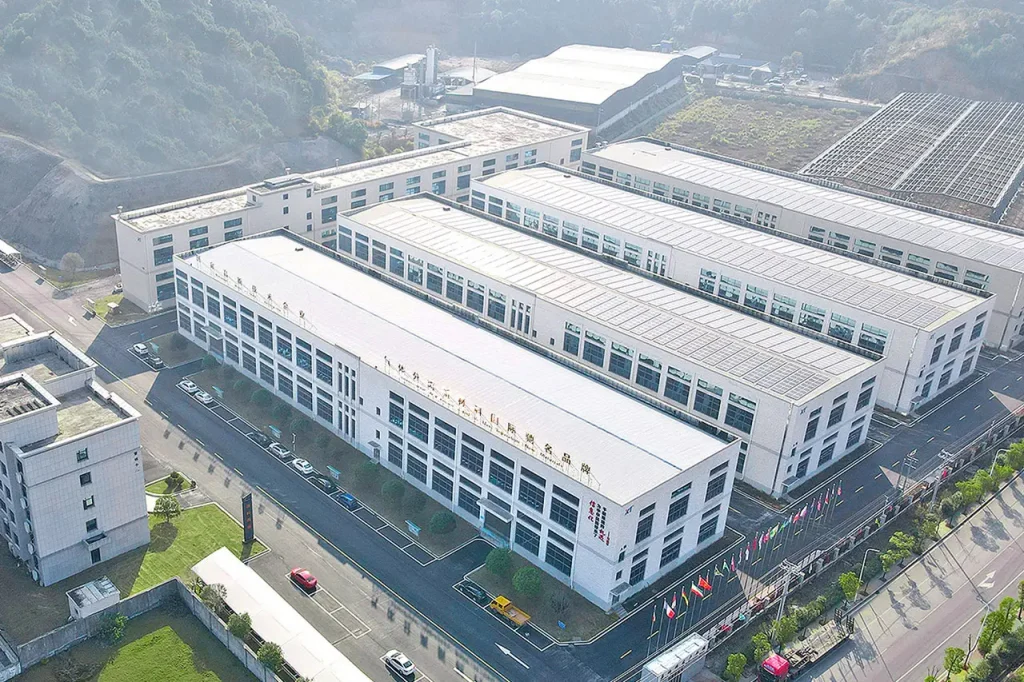
Address: Xintao Technology Industrial Park, New Third Board Industrial Park, No. 12 Shangxian West Road, Pingxiang Economic Development Zone, Jiangxi, China